

For asphalt producers and crushing contractors alike, choosing the right crusher can determine whether recycled asphalt (RAP) becomes a profitable asset or a constant operational headache. The challenge is that nearly every crusher performs well during a short demonstration. The real test begins after hundreds of operating hours, when sticky bitumen, heat, moisture, and contamination start exposing a machine's weaknesses.
When it comes to asphalt recycling with mobile impact crushers, the question isn't how many tons a machine can produce in the first hour. The question is whether it can maintain production day after day, week after week, throughout an entire crushing season.
The Hidden Challenges of Crushing Asphalt
Many operators assume that asphalt is easier to process than concrete or natural rock. In reality, asphalt recycling presents a unique set of challenges that can severely impact uptime and profitability.
Sticky Material Causes Continuous Build-Up
Unlike dry aggregates, asphalt contains bitumen that becomes soft and sticky as temperatures rise. Fine asphalt dust adheres to virtually every surface of the machine.
Common problem areas include:
- Radiators and cooling systems
- Crusher chambers and impact walls
- Seals and flashing
- Conveyor rollers
- Engine compartments
- Underpan feeders
As the material accumulates, it attracts more dust, creating a cycle of buildup that becomes increasingly difficult to manage.
Heat Is the Enemy of Uptime
The hotter the environment, the more difficult it becomes to process asphalt efficiently.
Warm asphalt behaves like a gummy material rather than a rocky aggregate. Bitumen dust can liquefy when it contacts hot machine surfaces and then harden again as temperatures fluctuate.
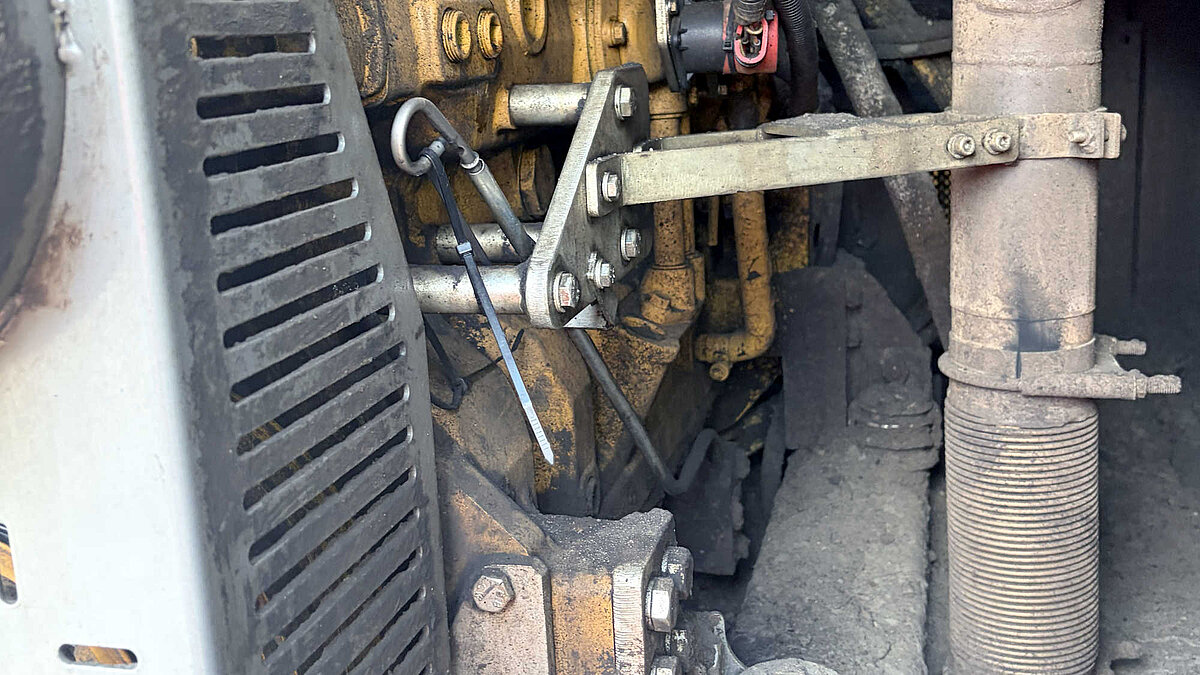
For many diesel-hydraulic impact crushers, the radiator becomes the weakest point in the system. Once the cooling package becomes clogged with asphalt dust, overheating becomes inevitable.
Some contractors running high-volume RAP operations keep spare radiators on the shelf. While one radiator is operating, another is soaking in cleaning chemicals to remove hardened asphalt residue.
Asphalt Is Highly Abrasive
Although asphalt is often perceived as a softer material, recycled asphalt can be extremely abrasive.
Wear is accelerated by:
- Sand and aggregate contained in the mix
- Contaminants in reclaimed material
- Material buildup that changes wear patterns
- Excessive recirculation caused by screening inefficiencies
The result is shortened wear life and higher operating costs.
Why Short-Term Crusher Tests Can Be Misleading
A 20-minute demonstration may prove that a crusher can process asphalt.
It does not prove that the machine can survive a full crushing season.
The reality is simple: every new machine looks good on day one.
During a short test:
- Radiators are clean.
- The crusher chamber is free of buildup.
- Seals are uncontaminated.
- Screen media is not plugged.
- Operators are not yet dealing with accumulated maintenance issues.
Most of the factors that impact profitability only appear after extended operation.
Asphalt dust begins accumulating. Components become harder to clean. Cooling efficiency decreases. Production slowly declines. Maintenance requirements increase.
These issues cannot be identified during a brief demonstration.
A machine that produces excellent results for an hour may struggle to maintain the same performance after several hundred operating hours.
Real-World Variables That Affect Asphalt Recycling
Material Input Size Matters
Not all asphalt is created equal.
Crushing large asphalt slabs is very different from processing milled asphalt.
In many cases, reducing already-small material to an even finer specification requires more energy and creates additional wear than breaking larger chunks into smaller pieces.
A crusher that handles slabs efficiently may perform very differently when producing fine RAP products.
Uncrushable Objects Can Destroy Wear Parts
Asphalt frequently contains foreign objects such as:
- Milling teeth
- Bucket teeth
- Steel debris
- Miscellaneous scrap metal
Many operators favor high-chrome hammers because they provide excellent wear life when processing asphalt. However, these hammers are also more brittle and can crack when they encounter uncrushable material.
What looks like an economical wear setup during a demonstration may become expensive if contamination is common in your feed material.
Contaminants Reduce Throughput
Modern road construction often includes reinforcement fabrics such as petromat.
These fabric layers can wrap around screen media and clog screening systems.
When screens become plugged:
- More material recirculates through the crusher
- Throughput decreases
- Wear increases
- Fuel consumption rises
Again, these issues typically only appear after extended operation.
Moisture Creates Trade-Offs
Many operators add water during hot summer months to cool asphalt and improve crushing performance.
While effective, adding water creates additional challenges:
- Increased material buildup inside the machine
- Accelerated wear on hammers and impact walls
- More screen blinding
- Reduced screening efficiency
- Additional heating requirements at the asphalt plant when reusing RAP
Moisture management becomes a balancing act between crushing efficiency and downstream processing costs.
Ambient Temperature Changes Everything
Few variables impact asphalt crushing more than temperature.
As temperatures rise:
- Asphalt becomes stickier
- Bitumen dust adheres more easily to machine surfaces
- Material buildup accelerates
- Cooling systems work harder
- Cleaning becomes more frequent
Machines that perform well in spring conditions may face completely different challenges during mid-summer production.
This is why evaluating a crusher during a single demonstration day rarely provides the full picture.
Long-Term Testing Is the Only Reliable Evaluation Method
If you want to understand the true economics of asphalt recycling with mobile impact crushers, you need data from thousands of operating hours, not a few demonstration loads.
Long-term operation reveals:
- Actual cost per ton
- Real wear-part consumption
- Maintenance requirements
- Cleaning frequency
- Downtime causes
- Seasonal performance changes
- Operator feedback
Most importantly, it shows whether a machine can sustain production over the long run.
Before making a purchasing decision, speak with operators who have processed asphalt continuously for months or years. Their experience often provides more valuable insight than any demonstration.
“When you compare machines, they may be similar in the short term. The problems come further down the line. It's the downtime that comes with the harsh environment with asphalt. The abrasion and bitumen are a constant battle. RUBBLE MASTER impact crushers are engineered with durability and ease of use in mind.”
Tom Chapman, MRD Plant Ltd.
Design Features That Help Keep Asphalt Operations Running
Experienced asphalt recyclers understand that uptime often depends on how well a machine handles buildup and heat.
Several design features can significantly improve performance in asphalt applications:
- Wide-core radiators located farther away from dust sources
- Easy-access cooling packages for faster cleaning
- Swing-out radiator systems that provide direct access to cooling surfaces
- Push-fan designs that reduce dust accumulation inside the engine compartment
- Easy-access engine bays for routine cleanup
- Efficient material discharge systems that minimize buildup
- Specialized asphalt sealing packages that reduce dust accumulation beneath the crusher
These features may seem minor during a demonstration, but they become critical after hundreds of hours in a demanding RAP operation.
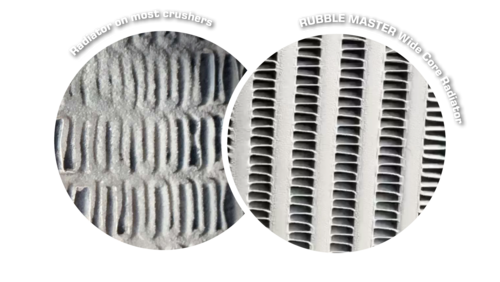
Wide-Core Radiator Keeps You Crushing Longer
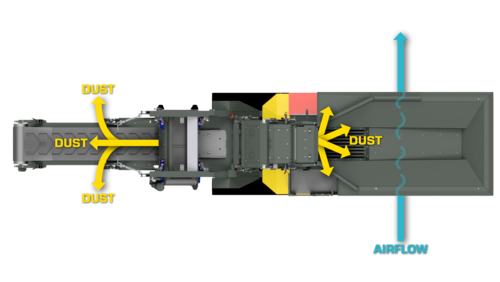
Less Dust in the Engine Compartment
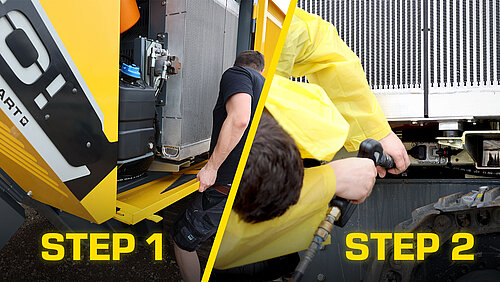
Easy to Clean
Operator Experience Matters More Than Specifications
Production numbers on a brochure only tell part of the story.
The most productive asphalt recycling operations are often run by crews that can:
- Perform daily inspections quickly
- Clean the machine efficiently
- Access service points easily
- Detect issues before they become costly failures
- Maintain consistent production over long periods
Ease of maintenance directly affects uptime.
A machine that is easy to clean and service often outperforms a machine with a slightly higher theoretical capacity but poorer accessibility.
Conclusion: Evaluate the Crusher, Not the Demonstration
When evaluating a crusher for RAP production, don't focus on the first hour of performance.
Focus on the next 1,000 hours.
The true measure of success in asphalt recycling with mobile impact crushers is not peak throughput during a demonstration. It is consistent production, manageable maintenance, low downtime, and predictable operating costs over an entire season.
Before investing in your next crusher, look beyond the demo. Visit active jobsites. Talk to experienced operators. Evaluate how the machine performs after months of continuous asphalt recycling, not just a few truckloads.
Because in high-volume asphalt recycling, long-term reliability is what ultimately determines your cost per ton and your profitability.
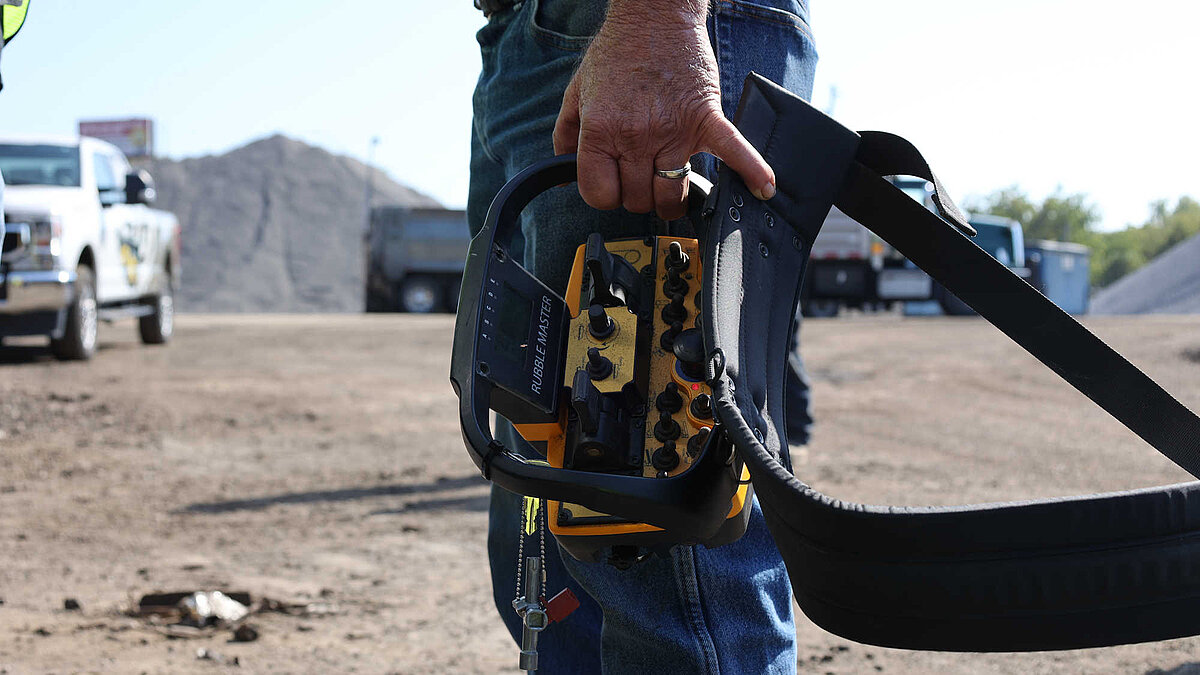
Ready to Evaluate a Crusher for Your Asphalt Operation?
Arrange a comprehensive site analysis and extended machine evaluation. The best crusher for your operation is not the one that looks best during a short demonstration. It's the one that keeps producing when the real-world challenges of asphalt recycling begin.



Get our Best Advice
Join over 16,000 people who get our practical crushing & screening tips once a month.
